Introduction Agriculture has come a long way from traditional farming practices. In today’s rapidly evolving world, the integration of technology and innovation has given rise to a groundbreaking approach known as Spatial Farming. This transformative concept leverages the power of data, sensors, Read More
What is the meaning of geospatial engineering? Geospatial engineering is the study of the collection, analysis and interpretation of data relating to the earth’s surface. Our work has many applications across the realms of science and engineering. We carry out internationally leading research Read More
Background With a total food production of 960 million tonnes (MT), the estimated Gross Value Added (GVA) by agriculture, forestry, and fishing to the Indian economy stood at INR 19.48 lakh crore (USD 254.17 billion) in FY 2020. Contributing 20% to Read More
The intersection of GIS and Machine Learning is evolving, bringing new use cases and ML applications to the forefront. These applications, which span both the private and public sectors, are powered by massive amounts of data collected by satellites, drones, cameras, LIDAR sensors, and other sensors, all of which work together to provide a comprehensive view of the world. The sheer volume and variety of data complicates its management and utilization.
RCMRD Map Competition 2022 Entry Form Competition Timeline 21 July 2022 Physical launch to be done and registration is opened 3 Aug 2022 Online Launch 28 July 2022 at 11:00 East Africa Time (+3 GMT) Register to attend 30 Sep 2022 Registration ends and submissions of Read More
24 Participating Countries Angola, Botswana, Burundi, Comoros, Eritrea, Eswatini, Ethiopia, Kenya, Lesotho, Madagascar, Malawi, Mauritius, Mozambique, Namibia, Rwanda, Seychelles, Somalia, South Africa, South Sudan, Sudan, Tanzania, Uganda, Zambia and Zimbabwe. Objective To Promote the use of Earth Observation and create awareness of Read More
Hosting 18% of the global population on just 2.4% geographical area, India is blessed with a rich diversity of climate, topography, natural resources, and socio-economic conditions. As a non-renewable ‘finite’ resource supporting primary production and social systems, land resources in India have been underperforming and over-exploited for long. About 78% of India’s geographical area is covered under agricultural and allied activities contributing 18% to GDP (2020), when compared with 40% contribution by other sectoral activities with land as principal component collectively.
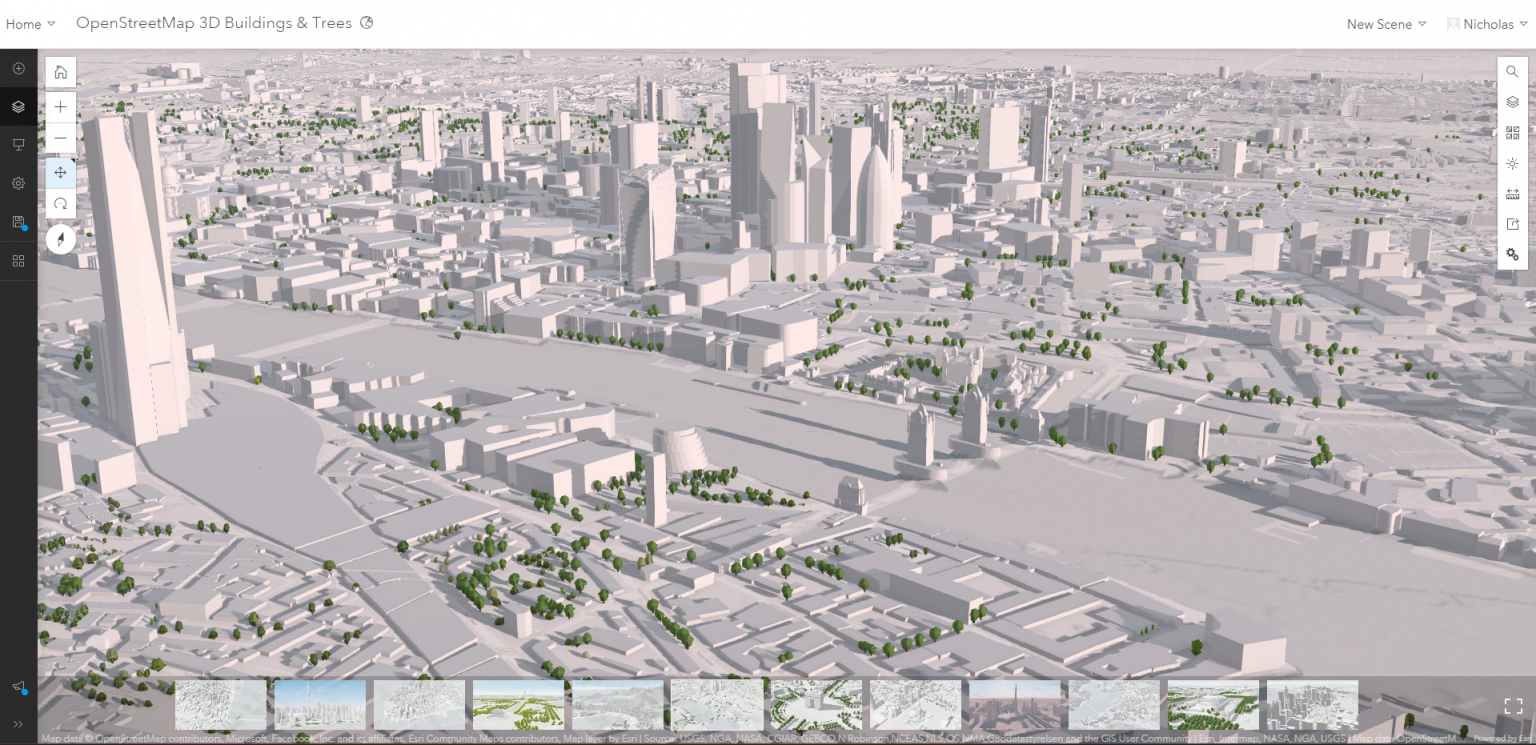
Being able to access OpenStreetMap in the Esri software as a basemap has always been helpful, but those of us who use 3D data regularly have had to load the vector data and build the data, which is very time-consuming.
Globally, organizations across industries are using big data to improve operations, manage supply chains, and enhance customer service experiences so that they can gain competitive advantage and boost profits. Spatial analysis of big data provides critical intelligence about where, when, and why Read More